Watching the TT
Where to Watch the TT
Choosing a vantage point at the TT: what each part of the course shows, how close the bikes pass, access on foot and the practical rules for spectators.
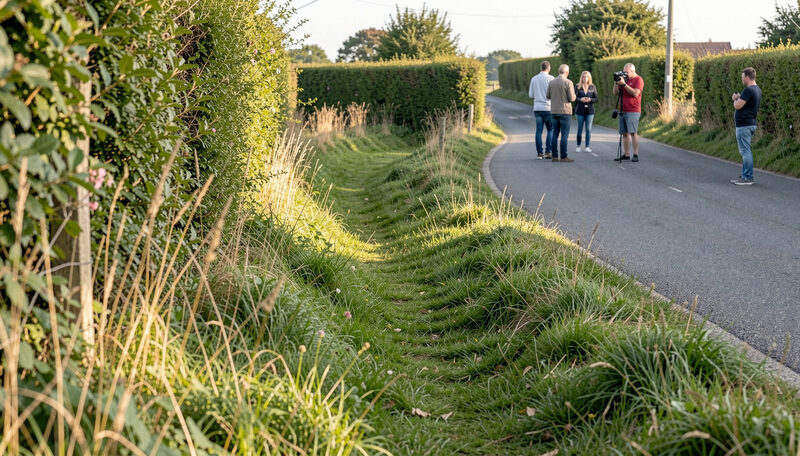
Choosing where to watch the TT is the main decision a spectator makes, and it is a decision about what kind of racing you want to see. The course is 37.73 miles long, and no single point shows more than a few seconds of each lap. A corner that rewards a photographer is not the same as a corner that rewards someone who wants a grandstand, a cup of tea and a screen showing the timing. This guide sets out the options and how to reach them.
Three kinds of vantage point
The course divides into three broad kinds of place to stand. The start and finish area around the Grandstand is the most developed, with grandstands, facilities and the easiest access. The town and village sections put the spectator close to the racing line between houses, with pubs and shops nearby. The mountain is open, exposed and large, with long views and unpredictable weather.
Each has a different rhythm. The start area is busy and continuous. The villages are intimate and loud. The mountain is quieter and more demanding, because getting there and staying there takes planning.
The start and finish area
The Grandstand area on Glencrutchery Road is the natural first choice for a visitor who wants the full race-day experience. The start line, the paddock, the timing tower and the main spectator facilities sit together, and because the finish is almost in the same place, a spectator here sees both the beginning and the end of every lap. The opening drop at Bray Hill is a short walk away, and Quarter Bridge is close enough to reach on foot between sessions.
The trade-off is that this is the busiest part of the course. Seats, standing room and parking all fill early, and moving between points once the road closes is difficult.
The towns and villages
The village sections of the course offer the closest views of the racing. In places such as Kirk Michael, Ballaugh and Sulby, the road passes between houses and the crowd stands on pavements within a few metres of the racing line. The bridge at Ballaugh is the best known of these spots, because the road rises over a hump and the crowd is dense on both sides.
Villages are also convenient. Food, shelter and transport are close, and the road stays open for longer before a session, so arriving early is less critical than on the mountain. The trade-off is that the views are short and the noise is intense, and a spectator who wants to see a machine for more than a moment should choose a different kind of place.
The mountain
The mountain section gives the best combination of landscape and technical racing. The hairpin at Ramsey shows rider control at low speed. The Gooseneck shows linked bends on a gradient. The Bungalow and the summit show the island itself. The descent past Creg-ny-Baa shows the run to the finish from above.
The cost of watching from the mountain is access. The road closes, the weather changes, and the walk back at the end of a session can be long. A spectator who plans to spend a day there should carry food, water and waterproof clothing, and should know which footpaths and public routes remain open.
Getting to a vantage point
Access is the practical heart of watching the TT. Once the course closes, the only ways to move are on foot, on the public rights of way that cross or avoid the course, and on buses and trains where they still run. The Manx Electric Railway along the east coast and the Snaefell Mountain Railway are useful for reaching parts of the course, and buses connect the main towns.
The rule that follows is simple: decide where to stand, arrive before the closure, and stay for the session. A spectator who tries to move mid-session will usually find that the road is shut and the alternative route is much longer than expected.
Practical rules for spectators
Marshals in orange overalls control the course, and their instructions are not advisory. Spectators should stay behind the barriers, keep children and equipment back from the edge, and never step onto the road. Road racing has no run-off, so the strip of grass between the crowd and the racing line is often all that separates the two.
It is also worth remembering that the course is a working road for the rest of the year. Fences, walls and hedges belong to residents, and gates must be left as they are found. The event depends on the goodwill of the island, and the behaviour of spectators is part of that.
Matching the place to the visit
A first visit is usually best served by the start area, where the facilities make a long day comfortable and the racing is constant. A second visit can move to a village for closeness, or to the mountain for landscape and technical corners. A photographer will want a different set of places again, and those are covered in the guide to photographing road racing.
Whichever is chosen, the names of the corners are the shared map. The index of named corners of the Mountain Course lists them in the order a lap meets them, and the guide to watching the TT explains how the fortnight and the closures work. The organisers publish their own race guide and access information at iomttraces.com.