The Races
A Short History of the TT
From the first race at St John's in 1907 to the Mountain Course and the modern era: how the Tourist Trophy became the most famous road race in the world.
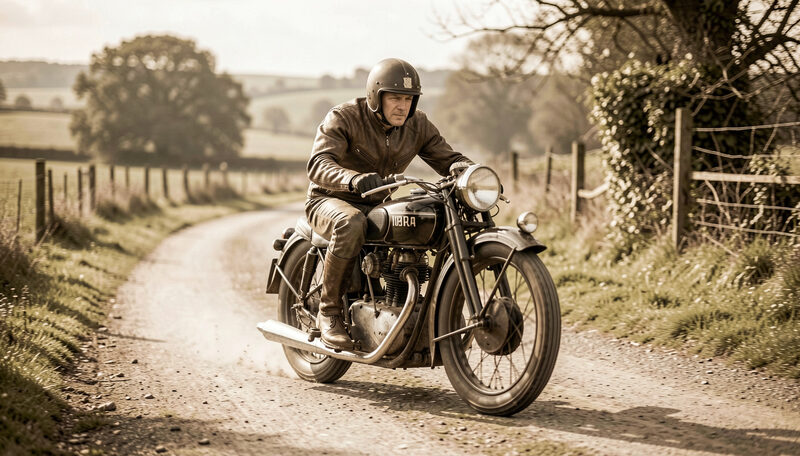
The Isle of Man TT began in 1907 as a trial for touring motorcycles and became the most famous road race in the world. It has survived two world wars, the loss of its place in the world championship, and decades of debate about whether racing on public roads should continue at all. This guide follows the main line of that history, from the first race on a short course at St John's to the modern fortnight on the Mountain Course.
Why the race came to the Isle of Man
At the start of the twentieth century, racing on public roads in mainland Britain was effectively prohibited, and a national speed limit made fast trials impossible. The Isle of Man, a self-governing crown dependency with its own parliament, took a different view. The island had already hosted car trials, and the same roads offered a place to test motorcycles over long distances.
The first motorcycle Tourist Trophy was organised by the Auto-Cycle Club and held on 28 May 1907. It was run over ten laps of the St John's Short Course, a circuit of about 15 miles, and it was divided into single-cylinder and twin-cylinder classes. The rules were written to emphasise the touring nature of the machines: saddles, pedals, mudguards and silencers were all regulated.
The first winners
Charlie Collier won the single-cylinder class on a Matchless, and Rem Fowler won the twin-cylinder class on a Norton. The race was a test of endurance as much as speed, with a compulsory refuelling stop and frequent mechanical trouble. The average speeds were modest by modern standards, and the margins between riders were measured in minutes rather than seconds.
The use of pedals caused a dispute in that first year, because a rider could use them to help the machine along. Pedals were banned the following season, and the race began to move toward the form it still has today.
The move to the Mountain Course
The St John's course was used until 1910. In 1911 the race moved to the longer circuit that became known as the Snaefell Mountain Course, the 37.73 mile route through Douglas, the west coast villages, Ramsey and the mountain. That change gave the TT its defining feature: a lap that climbs from sea level to a summit and back, on roads bordered by walls and hedges.
The new course was longer and harder than anything the race had used before, and it immediately became the measure of a road racer. The layout has been adjusted over the years, but the essential route has remained the same for more than a century. Its geography is described in the guide to the Snaefell Mountain Course.
The growth of the event
Through the 1920s and 1930s the TT grew into the leading motorcycle race in Europe. Sidecar racing was added in 1923, and the meeting expanded to include several classes run over separate races. Between the wars the event established the reputations of riders and manufacturers alike, and the lap speeds rose steadily as machines improved.
Racing stopped during the First and Second World Wars and resumed afterwards. In 1949 the TT became a round of the newly created motorcycle world championship, and it remained on the calendar until 1976, when the championship moved to permanent circuits. The withdrawal of the world championship did not end the event. It changed what the TT was for, and the race continued as a stand-alone road race with its own traditions.
The modern era
The second half of the twentieth century produced the riders most associated with the TT. Joey Dunlop won a record 26 races at the meeting, a total that stood for many years. John McGuinness built a long career on the course, and a later generation including Michael Dunlop and Peter Hickman pushed lap speeds beyond 130 mph.
The outright lap record now stands at 16 minutes 36.115 seconds, an average of 136.358 mph, set by Peter Hickman on a BMW M1000RR during the 2023 Superstock TT. The official records are maintained by the organisers at iomttraces.com, and a fuller account of the event is kept at iomtt.com.
The meeting has also changed shape. The TT was cancelled in 2020 and returned in 2022. Electric classes were introduced and later retired. The schedule has been adjusted repeatedly to fit weather and safety requirements. What has not changed is the format: practice and qualifying followed by race week, with the Senior TT as the final race.
Safety has been the constant argument. The course has no run-off areas, and serious accidents are part of its record. Over the decades the response has been incremental: better barriers in some places, more marshals, improved medical cover, changes to the schedule, and restrictions on who may compete. The debate about whether racing on public roads should continue has never been settled, and it is conducted every year between those who see the event as a unique test of skill and those who see the risk as unacceptable.
What is not in dispute is the technical progress the course has driven. Brakes, tyres, frames and engines have all been developed against the demands of a 37.73 mile road lap, and the lessons learned at the TT have fed back into production motorcycles. The event has always been a proving ground as well as a race.
Why the history still matters
The TT is often described as the last great road race, and the phrase is not only nostalgia. It is the reason the event exists at all, the reason the course is a public road network, and the reason the safety debate has continued for a century without ever fully resolving.
A reader who wants the racing explained as a competition can turn to the guide to the TT races. A reader who wants the other event on the same roads can read about the Manx Grand Prix and the Classic TT. A reader who wants to see the racing can start from the guide to watching the TT. The history is the context for all of them.