Watching the TT
Watching the Isle of Man TT
How to watch the TT: practice week and race week, road closures, getting to the island, where to stand and what a day at the course actually involves.
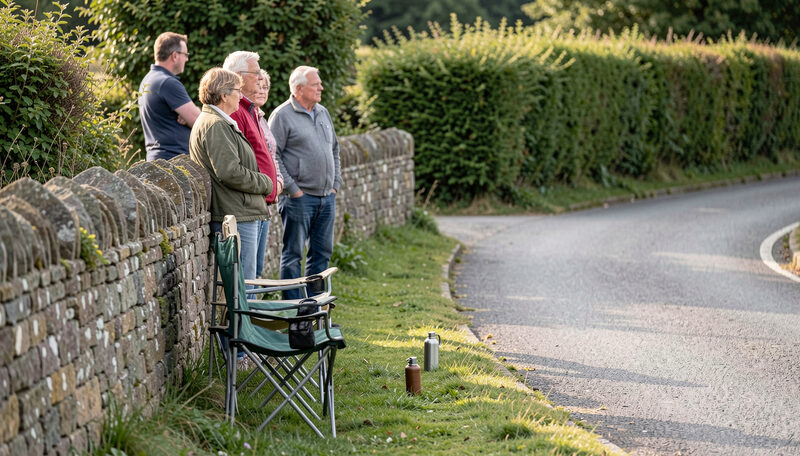
Watching the Isle of Man TT is unlike watching any other motorsport, because the circuit is a public road network that closes and reopens around the racing. A spectator does not buy a seat in a stadium and stay in it. They choose a place beside a wall or a hedge, walk to it, and stay there for a session. This guide explains how the fortnight is organised, how the closures work, and what a day at the course actually involves.
The shape of the fortnight
The TT runs over roughly two weeks in late May and early June. The first week is given to practice and qualifying, with sessions in the late morning, the afternoon or the evening depending on the day. The second week is race week, when the actual races are run. The event ends with the Senior TT, the longest and most prestigious race of the meeting.
Because the TT is a time trial rather than a mass-start race, riders leave the start line at intervals and race against the clock as much as against each other. That format is explained in the guide to the TT races. For a spectator it means that the action at any given point is a stream of individual machines rather than a pack, and that timing is followed on screens and radios as much as by eye.
Road closures
The course is closed to ordinary traffic for each practice session and each race, and it is reopened between sessions. Closures follow a published schedule, but they can be delayed or extended by weather, by an incident, or by the need to recover a machine. On the mountain in particular, mist and rain can change a session at short notice.
The practical consequence is that a spectator plans around closures rather than against them. Once the road closes, the only way to move between points on the course is on foot, by the routes that stay open, or by the island's buses and railways where they run. Getting to a chosen vantage point before the road closes is the single most important piece of planning.
Getting to the island
The Isle of Man is reached by ferry from England, Scotland and Ireland, and by air from a number of UK airports. During the TT both routes are heavily booked, and accommodation fills early. The busiest days are around the opening weekend and the final race weekend.
Within the island, Douglas is the transport hub and the capital. Buses run between the main towns, the Manx Electric Railway runs along the east coast, and the Snaefell Mountain Railway climbs to the summit of Snaefell, which is the highest point on the island and a different summit from the highest point of the course. Rail and bus timetables change during the TT, so a visitor should check the day's arrangements rather than assume a normal service.
Where to stand
The course offers three broad kinds of vantage point. The first is the start and finish area around the Grandstand, which has the most facilities and the easiest access. The second is the town and village sections, where the road passes between houses and the crowd stands close. The third is the mountain, where the road is open, the landscape is large, and the weather is unpredictable.
Choosing between them is the main decision a spectator makes. The guide to where to watch the TT sets out what each part of the course offers and how to reach it. A reader who wants the names of the places in order can use the index of named corners of the Mountain Course.
Marshals and safety
The TT is run with the help of a large number of volunteer marshals, who stand at posts around the course in orange overalls. They watch the road, report incidents by radio, and control the movement of spectators. Their instructions are not advisory. A spectator who steps onto the course, or who stands somewhere a marshal has asked them to leave, is a danger to themselves and to the riders.
Road racing has no run-off areas, so the space between the racing line and the crowd is often a wall and a strip of grass. Staying behind the barriers, keeping children and cameras back, and following the marshal's direction are the basic rules. The same rules apply at every corner, from Bray Hill to the mountain.
What a day involves
A typical day at the TT starts with a decision about which session to watch and where to be before the road closes. Spectators arrive early, settle behind a wall or on a verge, and stay for the length of the session. Food is often carried rather than bought, because the best vantage points are not always near a shop. Radios and phones are used to follow timing and commentary, since the racing is spread over 37.73 miles and no single point sees more than a few seconds of each lap.
The reward is a kind of access that no other form of motorsport offers. A spectator at the TT stands close enough to the racing line to hear the engine note change through a corner, and the course itself, from the streets of Douglas to the summit of the mountain, is part of the experience. The official schedule and visitor information are published by the organisers at iomttraces.com, and photography at the course is covered in the guide to photographing road racing.
Watching the TT
Where to Watch the TT
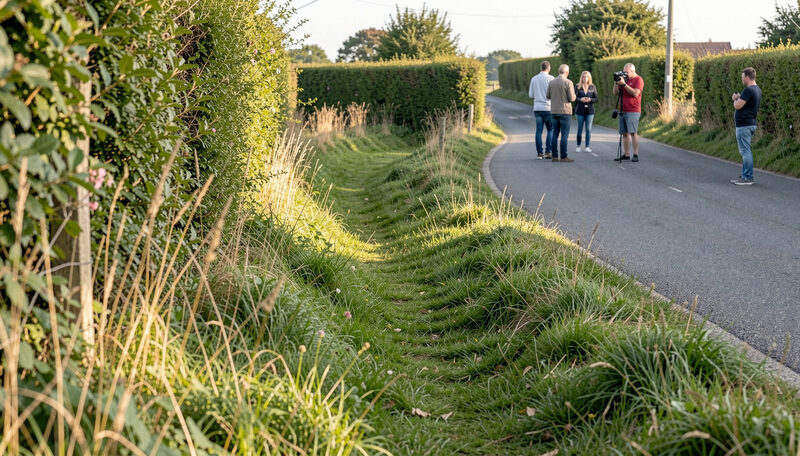
Choosing a vantage point at the TT: what each part of the course shows, how close the bikes pass, access on foot and the practical rules for spectators.
Start area, villages or mountain: what each place shows.
Watching the TT
Photographing Road Racing
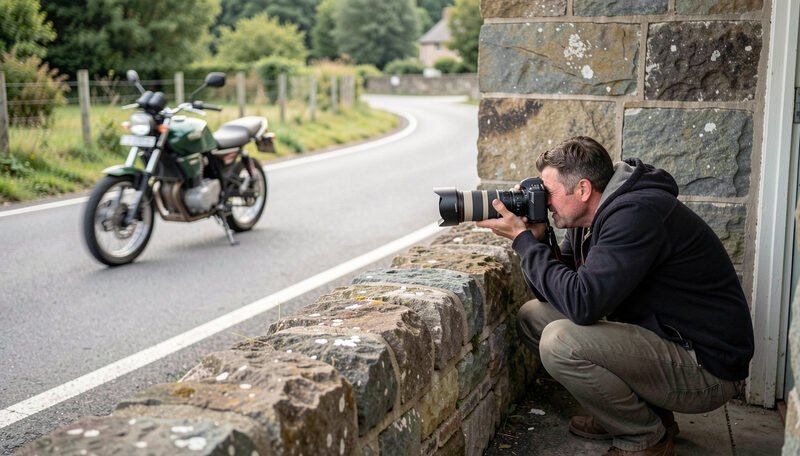
How to photograph the TT: reading a corner, shutter speeds and panning, the best vantage points for pictures, and staying safe behind the fences.
Reading a corner, panning, and staying behind the wall.